Pronouncing maison and collection names: the skill nobody teaches
The gesture lasts less than a second and it repeats all day long. The advisor moves her hand towards the display case, index finger half extended towards the piece, and says: "this one". Then she carries straight on to the material, to the size, to the delivery time. At no point does she pronounce the name of the collection. She has read it a hundred times on the labels, she has seen it in the catalogue, she has never heard it said by somebody she is certain says it well.
That gesture has a name internally, but it has no line in any training plan. It is called the workaround. The advisor replaces the name with a demonstrative, with a periphrasis, with a description. The sale goes through. The story, on the other hand, does not happen.
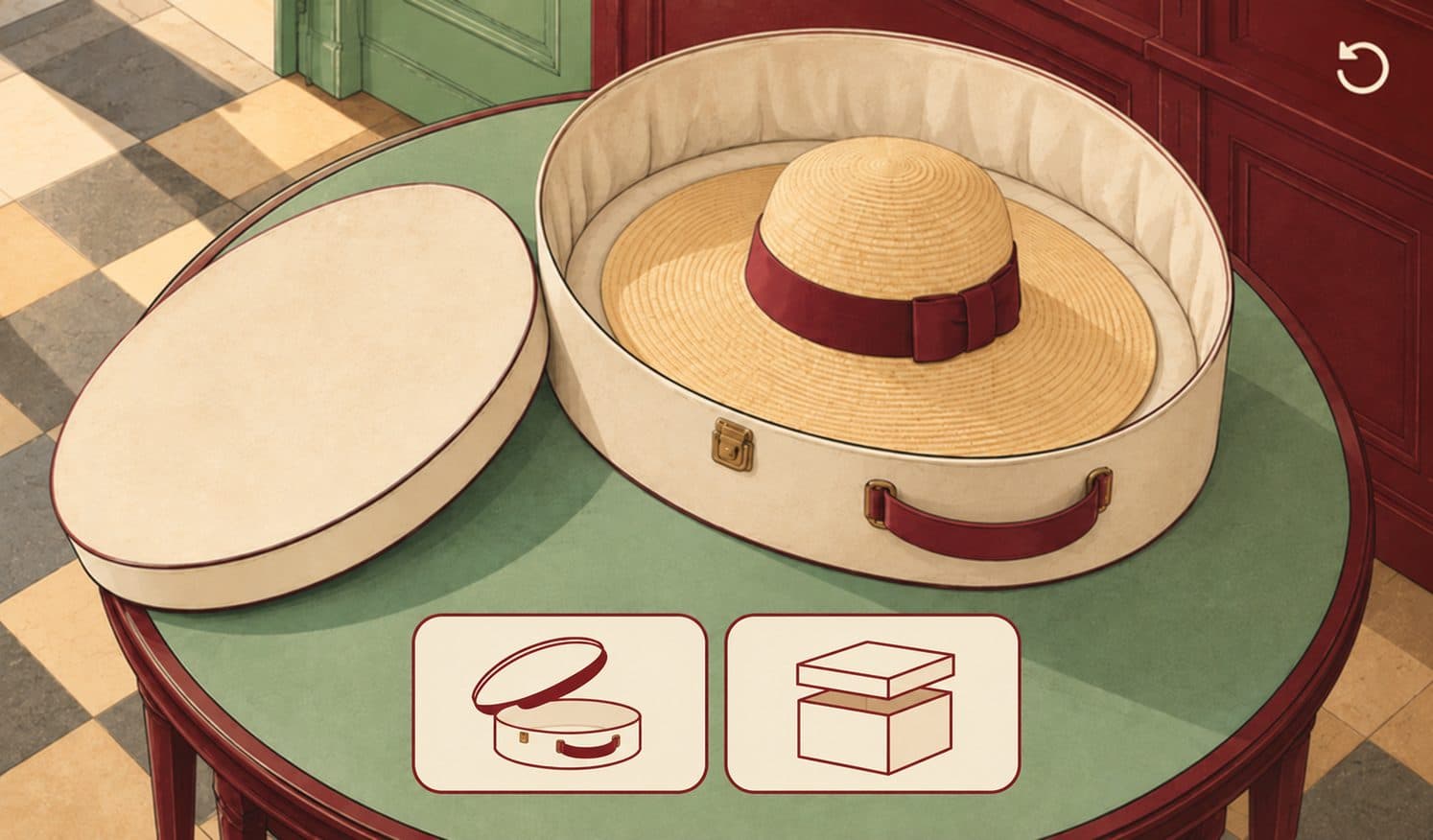
A regional director spending a day in the boutique spots that gesture within an hour. He spots it because he knows what it signals: not a deficiency in language, but a deficiency in confidence. Nobody willingly tells a story whose title they are not sure they know how to say.
What the workaround costs, beyond the label
A collection name is not a catalogue reference. It is the point of entry to the maison's story. For as long as it is not pronounced, the object remains a product and the conversation remains a transaction.
The cost reads in three precise places. In the length of the sale first: an advisor who works around the name shortens it, because a demonstrative does not allow her to go on to the origin of the name, and the sequence in which the maison tells its own story disappears without anybody seeing it disappear. In the authority of the person speaking next: a hesitation over a proper noun is not a failure of service, but it files the advisor on the side of the one who has read the datasheet rather than on the side of the one who knows the maison, and the client hears that difference without knowing how to name it. In what comes back from the field last: a name never pronounced appears in no client verbatim and shows up in no report, so that the problem stays invisible to head office for as long as nobody goes and listens to it in the boutique.
The cost is particularly clear in two situations. In front of an international client who pronounces the name with the original accent, the advisor who learnt it otherwise either corrects herself or falls silent. And on the telephone, where the demonstrative no longer works, avoidance becomes impossible.
What generic content can cover, and where it stops
The material available on the subject consists above all of public lists of difficult maison names, with their transcription. Those resources exist, they are sometimes good, and they all stop in the same place: the name of the maison.
A sales team needs everything else. It needs the collection names, far more numerous than the maison names and renewed every season. It needs the vocabulary of craft, often Italian, French or Japanese according to the trade. It needs the names of materials, of finishes, of stones. And it needs those names in the mouth, not on a sheet.
No training catalogue can cover that scope, for a structural reason: this content exists nowhere other than with you. The names of your collections, the way your maison wants them said, the trade-offs between the original pronunciation and local usage are internal decisions, taken by you, and often never written down. It is exactly the kind of content that justifies a custom production rather than an off-the-shelf module.
Tubogas, or the name the market pronounces badly
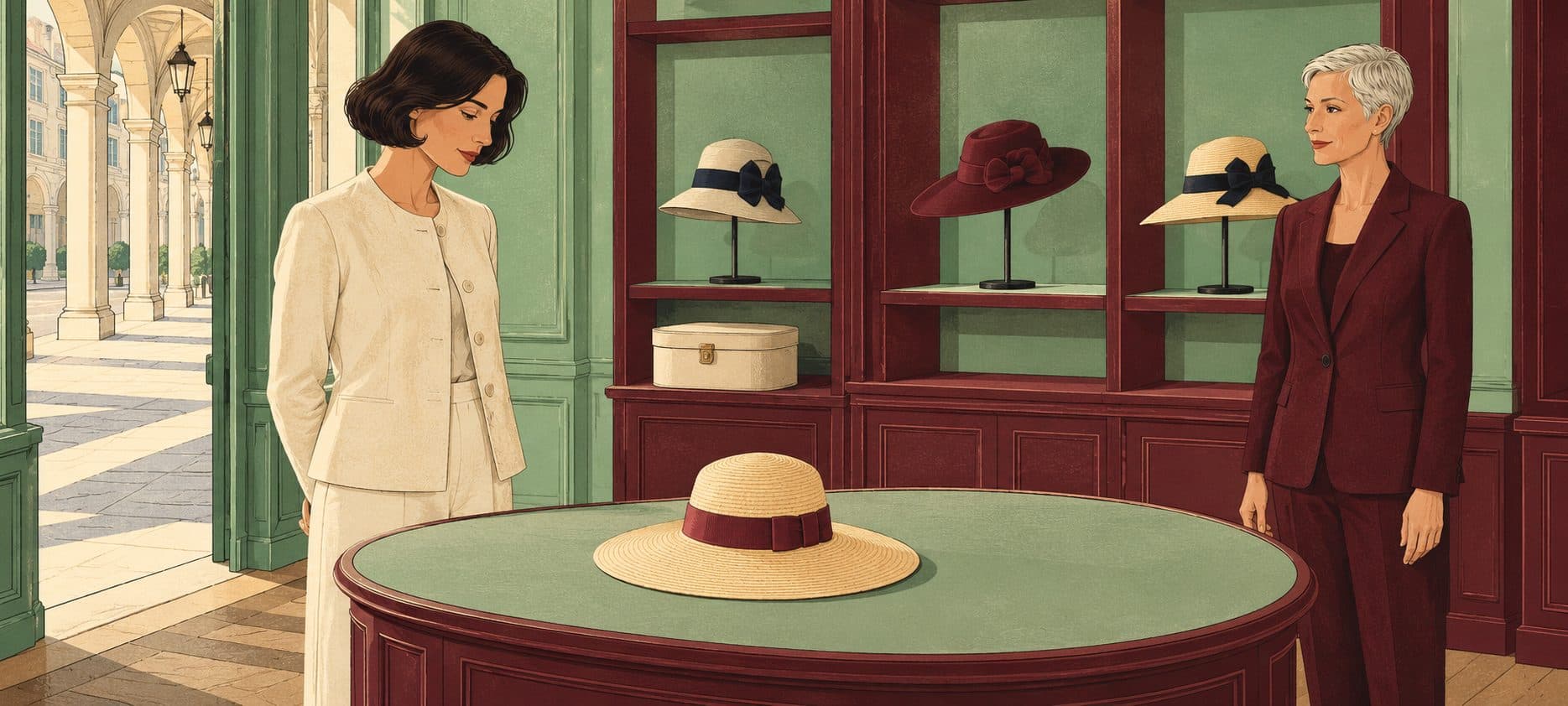
Take a concrete case. Tubogas is a Bvlgari signature, and it is a name the market pronounces badly. The mechanism can be deduced without difficulty: as soon as a name is read more easily than it is heard, everybody adopts their colleagues' version, and a shared approximation ends up standing in for a local norm.
What makes this case instructive is not the phonetic difficulty. It is the way a pronunciation settles into a team. A new arrival learns by listening to his colleagues, and he learns what they say, not what is written on the datasheet, which is one of the reasons onboarding a client advisor in the boutique cannot be left to imitation. A correction sent by head office addresses the information, whereas what is at stake is a way of saying it that has already been acquired.
That is the starting point of any serious pronunciation module: it is not a matter of learning a name, it is a matter of unlearning a habit and installing another one. Those are two different pedagogical operations.
Collection names and three other registers to cover
A useful module covers four families of names, and they are not worked on in the same way.
Maison names. The foundation. It concerns your own maison, but also the neighbouring maisons a client will talk about in front of the advisor.
Collection and model names. The heart of the subject, the largest, the most shifting, and the one no external resource addresses.
Craft and material vocabulary. Manufacturing techniques, finishes, stones, essences. These are the words that tip a description into a demonstration of expertise.
Client names and forms of address. Pronouncing correctly the name of a client who is not from your market is an act of service. That register belongs as much to the intercultural as to the phonetic, and we deal with it in cross-cultural communication in the boutique.
Why is the phonetic sheet not enough?
The usual answer to this need is a document: a list of names with an approximate transcription, sometimes with an audio file attached. That document is useful and it has to exist, as a reference.
It simply runs up against the nature of the skill in question. Pronouncing is not knowing: it is producing a sound, under a client's gaze, within a sentence that is moving forward. A transcription read in the morning does not come back at four in the afternoon, because what comes back at four in the afternoon is what the mouth has already done, and a sheet makes the mouth do nothing.
In practical terms, working on pronunciation calls for three things the sheet does not supply. A reference sound model, validated by the maison. An occasion to say the name, not merely to recognise it. And immediate feedback, telling the advisor whether what he has just produced matches the model or not.
Three field constraints are added to those. The sequence has to be short, because the time available in the boutique arrives in intervals. It has to be replayable at the advisor's own initiative, so that he can come back alone to the names that resist him, without having to ask. And it has to be adapted market by market, because the difficulty is not the same for a team in Seoul, in Dubai or in Milan: neither the missing sounds nor the habits already installed are the same.
What the product training built for Bvlgari demonstrates
The product training built for Bvlgari covers the maison's heritage, its craft and its care advice. It takes the form of a ten-minute solo game, in portrait format, built around five puzzles.
Two things make it a good vehicle for the subject that concerns us here. First the material: a maison's heritage is made of proper nouns, and an advisor who works through five puzzles on the origin of a signature comes out of them with the name attached to a story rather than to a label. Then the format: ten minutes solo, in portrait, on mobile, which fits between two clients and does not take the sales floor out of service.
A pronunciation module sits naturally within that format and that mechanic, which is already a great deal for a subject the market has barely addressed.
What remains is the question that decides everything: where the material comes from. A pronunciation module cannot be bought off the shelf, since the names are yours and the trade-offs between the original pronunciation and local usage are decisions for your brand. The market today holds several providers capable of building a short module for a maison, and that is not where the difference is made: it is made on the chain that connects the sound model to the module played in the boutique. At Emraude, the reference recordings, the game mechanics and the phonetic validation belong to one and the same team: a name badly rendered is corrected in the following version, instead of going back into specification with an audio provider and then with an integrator. It is that organisation which makes our etiquette and communication training possible.
Two articles extend this one: savoir-être, savoir-faire, savoir-dire shows why what the advisor says has a line in almost no competency framework, and clienteling training deals with what becomes of the relationship when the advisor knows how to name what he is selling.
Frequently asked questions
Should the original pronunciation be imposed, or local usage?
That is a brand trade-off, and it has to be settled at head office before any training. Many maisons keep the original pronunciation for their own names and tolerate local usage for technical terms. What is expensive is not the choice made, it is the absence of a choice: without an instruction, every market fixes its own.
Is a pronunciation audio file enough to train teams?
It supplies the sound model, which is necessary. It supplies neither the occasion to produce the name out loud, nor the feedback telling the advisor where he stands in relation to the model. Those two elements are what turn information into a gesture.
What should be done when a market has already installed its own pronunciation?
Treat it as a habit and not as an error of information. A note from head office does not undo what a team has been saying among themselves for three years. What undoes it is a repeated occasion to produce the other version, with immediate feedback, until the new one comes out without thinking. And if local usage is finally the one retained, it has to be written down, failing which every new arrival reopens the trade-off.
How do you check that teams are pronouncing the maison's names correctly?
By the success rate name by name and by its progression between two passes, then by observation in the boutique. A well-briefed mystery shopper can note whether the collection name is pronounced spontaneously or worked around, which is the most direct behavioural indicator on this subject.
Are your advisors avoiding certain names rather than pronouncing them? Request a demo